
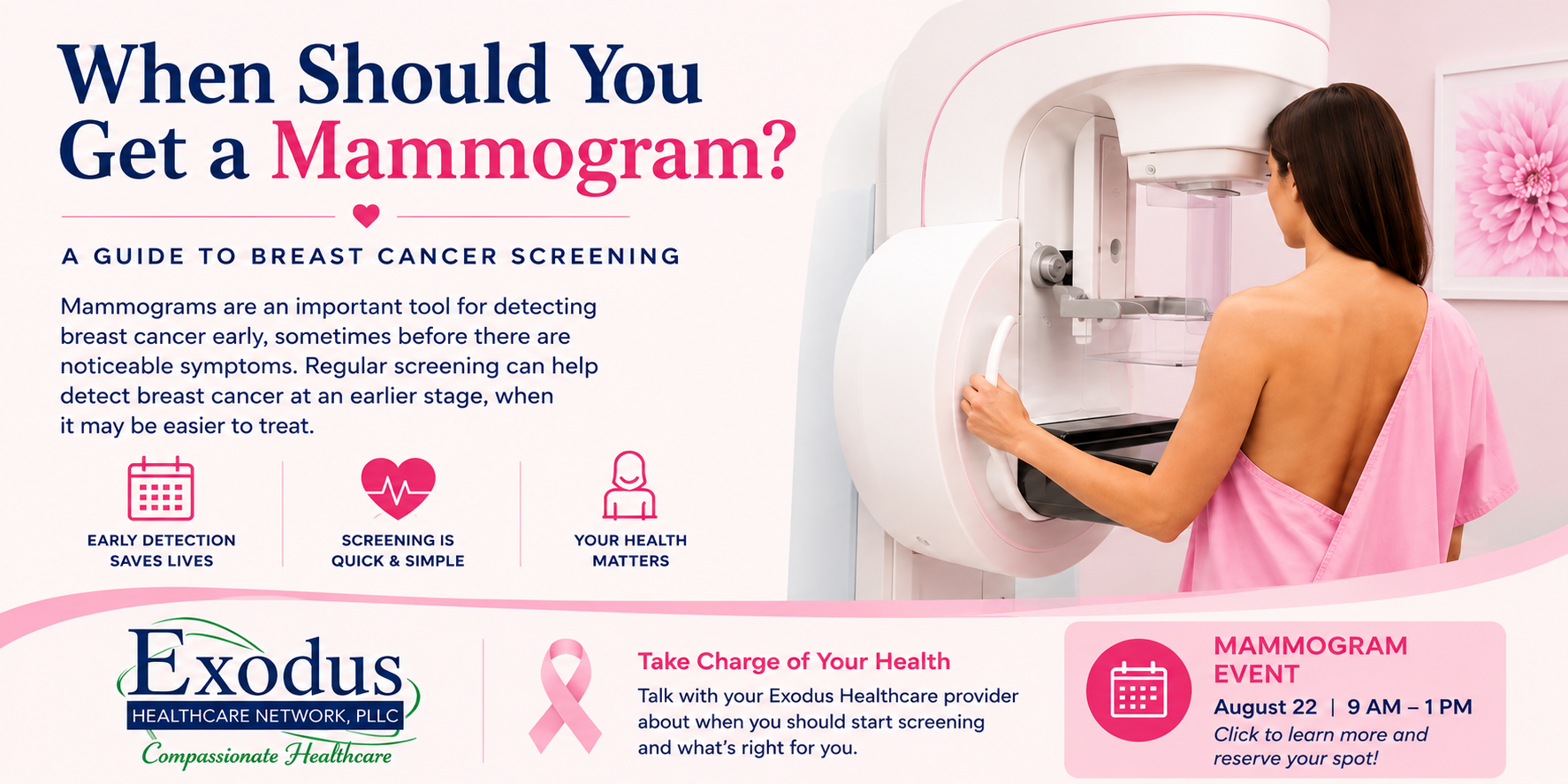
Mammograms are an important tool for detecting breast cancer early, sometimes before there are noticeable symptoms. Regular screening can help detect breast cancer at an earlier stage, when it may be easier to treat.
WHEN SHOULD YOU START GETTING MAMMOGRAMS?
For women at average risk of breast cancer, the U.S. Preventive Services Task Force (USPSTF) currently recommends screening mammography every two years from ages 40 through 74. This recommendation applies to people at average risk and does not apply to those with certain high-risk factors, such as a known genetic mutation associated with breast cancer or a previous breast cancer diagnosis.
Other organizations have somewhat different recommendations. For example, the American Cancer Society recommends that women ages 40–44 have the option to begin annual screening, recommends annual mammograms for women ages 45–54, and recommends transitioning to screening every two years at age 55, with the option to continue yearly screening.
Because recommendations can differ, it’s important to talk with your healthcare provider about which screening schedule is appropriate for you.
WHY ARE MAMMOGRAMS IMPORTANT?
Breast cancer screening is designed to identify cancer before symptoms develop. Finding breast cancer earlier can make a difference in treatment. The American Cancer Society notes that breast cancers found through screening are more likely to be smaller and less likely to have spread outside the breast.
A mammogram doesn’t guarantee that cancer will be detected, and screening can sometimes lead to false-positive results or additional testing. The USPSTF concludes that the benefits of screening outweigh the harms for women ages 40–74 at average risk.
WHAT IF YOU HAVE A HIGHER RISK OF BREAST CANCER?
Your screening needs may be different if you have factors that increase your risk. These can include:
• A strong family history of breast cancer
• Certain inherited genetic mutations, such as BRCA1 or BRCA2
• A personal history of breast cancer
• Certain previous breast biopsies
• Previous high-dose radiation treatment to the chest at a young age
The USPSTF’s standard recommendation for average-risk screening does not cover every high-risk situation. If you have an increased risk of breast cancer, talk with your healthcare provider about when you should begin screening and whether additional screening may be appropriate.
DON’T WAIT UNTIL YOU HAVE SYMPTOMS
Screening mammograms are intended for people who don’t have symptoms. If you notice a new breast lump, changes in the appearance of your breast, nipple changes, or another concerning change, don’t wait for your next routine screening. Contact your healthcare provider to discuss your symptoms.
TALK WITH YOUR HEALTHCARE PROVIDER ABOUT YOUR SCREENING PLAN
There isn’t necessarily a single screening schedule that is right for everyone.
Your age, family history, personal health history, and individual risk can all affect your healthcare decisions. Your provider can help you determine when mammography is appropriate and how frequently you should be screened.
If you’re due for a mammogram or aren’t sure when you should begin screening, talk with your Exodus Healthcare provider about your next steps.
Your health is worth making time for.
Ready to Schedule Your Mammogram?
Join us for our upcoming Mammogram Event on August 22 from 9 AM–1 PM. Click below to learn more and reserve your spot, or contact Exodus Healthcare at 801-250-9638 to schedule your screening.
Learn More & Schedule:
